Armenia
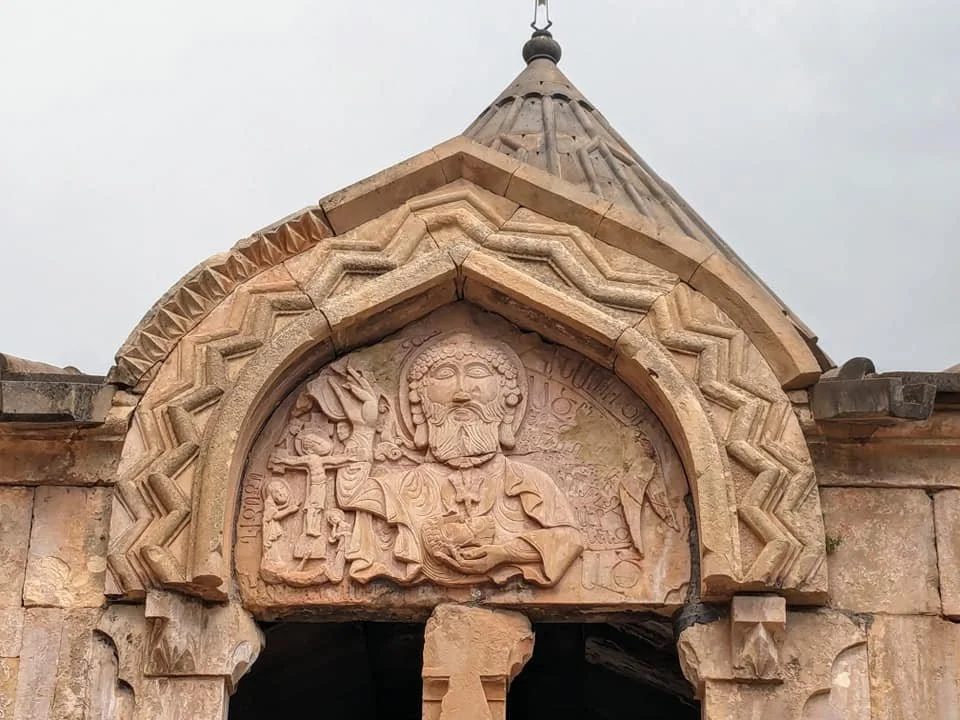
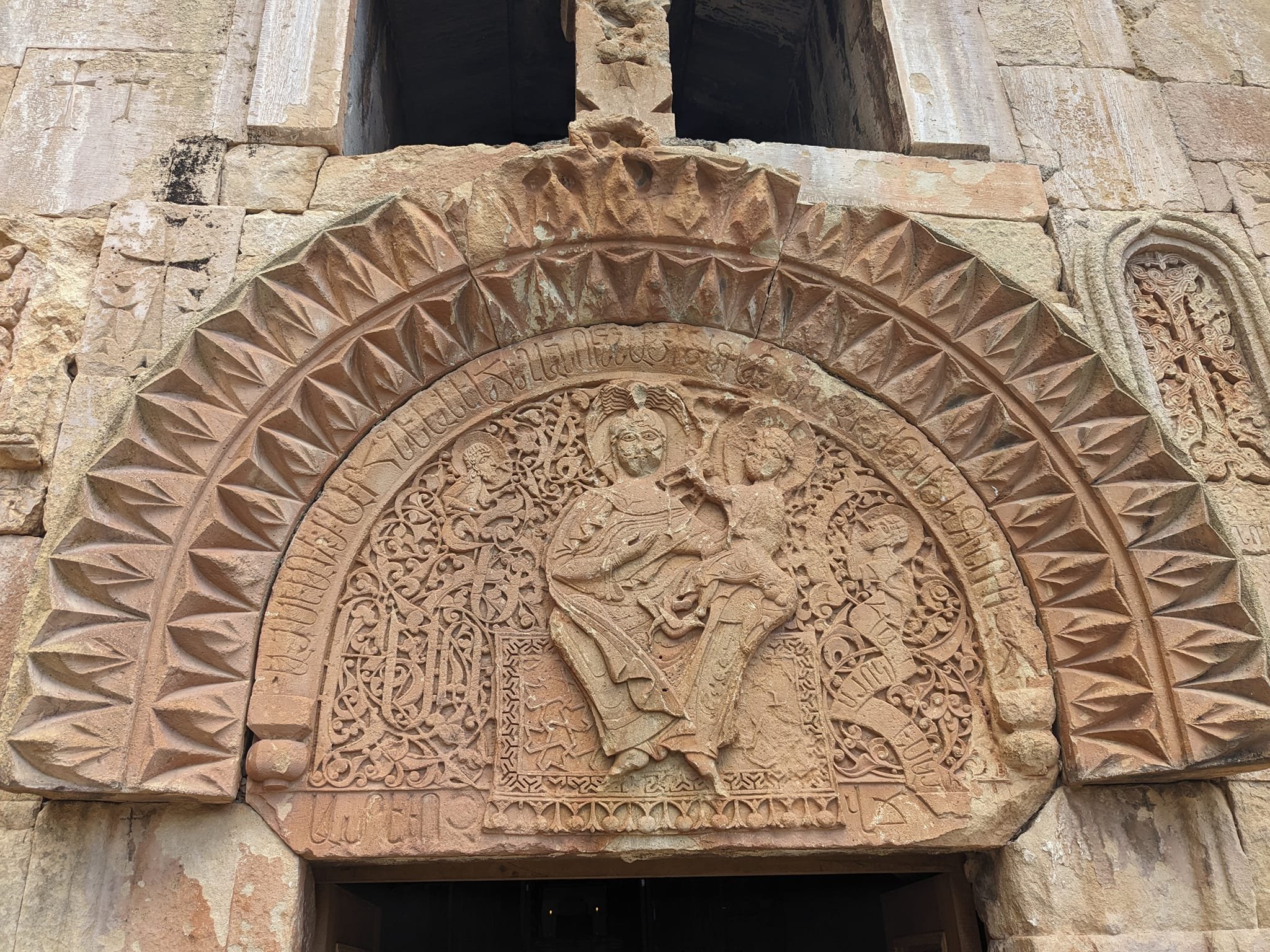
Tympanum, Noravank Monastery
I have been in Armenia for the last stage of my journey, with far too little time to see the wonders of this historic land.


The parts of Armenia that I have visited have been more arid than the Georgian river valleys I passed through earlier, with lots of dramatic gorges that probably show the impact of earthquakes over the millennia. It’s been very hard to have a conversation with anyone here, as English is less widely spoken than in Georgia or Turkey. If I knew a bit of Russian, it would be helpful.
One consistent feature in the landscape is Mount Ararat, which must be visible on a clear day to more than half of the country’s residents. The immense mountain, the traditional resting place of Noah’s ark, towers over everything around it, and everything is named for it (banks, beer, brandy, grocery stores, etc.)


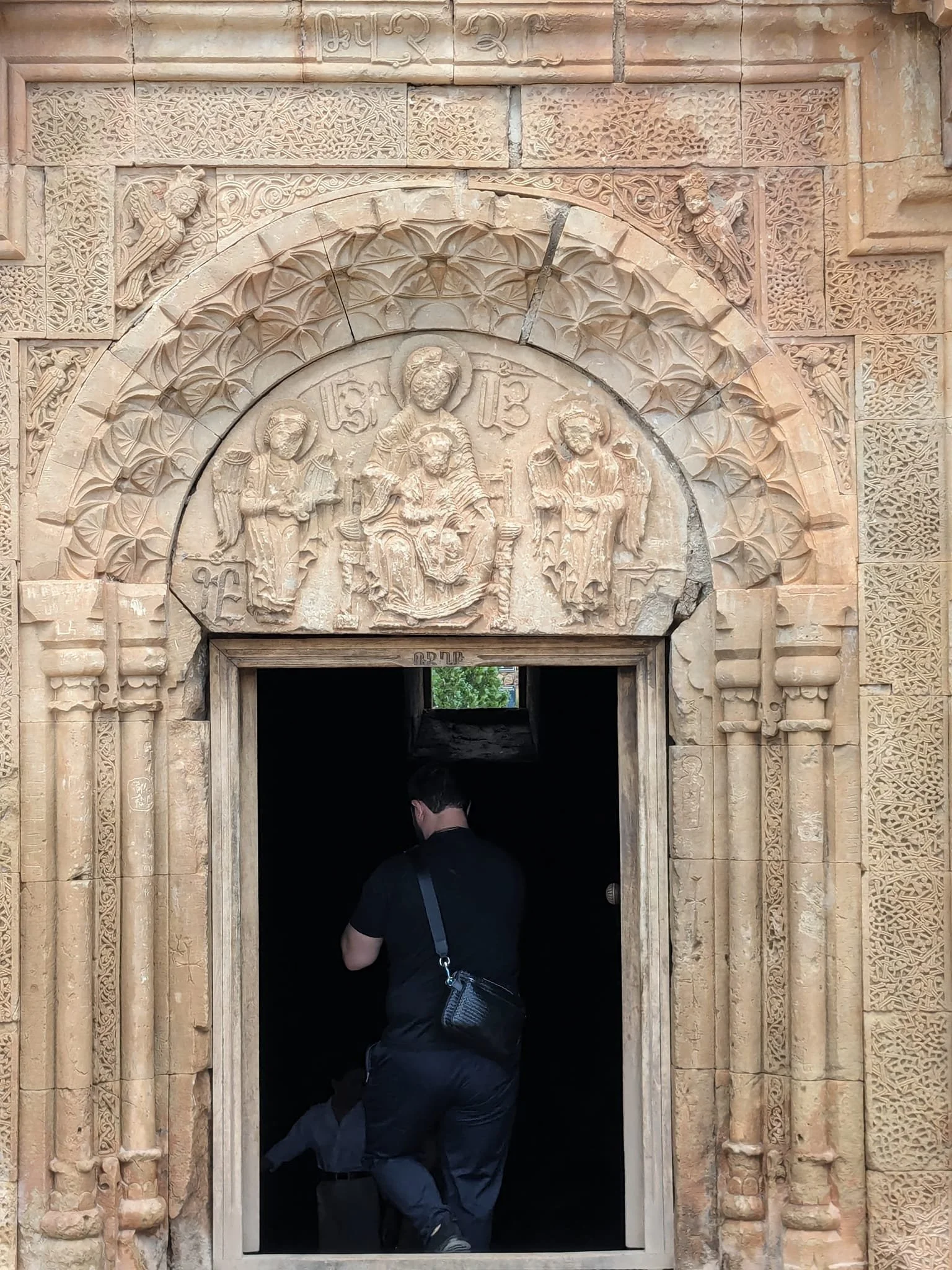

Like Georgia, most of Armenia’s major sights are monasteries and cathedrals, often situated in deep canyons or on hilltops with dramatic views on every side. Armenia was the first nation to accept the Christian faith, in 303, through the ministry of Gregory the Illuminator. I visited several places associated with his life, including the “mother see” of Etchmiadzin, the first church that he built; and Khor Virap, where he was imprisoned in a pit of snakes for seven years by King Tiridates before the king’s conversion.
The Armenian churches, like the Georgian ones, are relatively small, but very tall, and crowned by high pointed domes. They are built of massive blocks of stone, often red sandstone, and have very few windows or interior decoration of any kind, aside from relief carving.


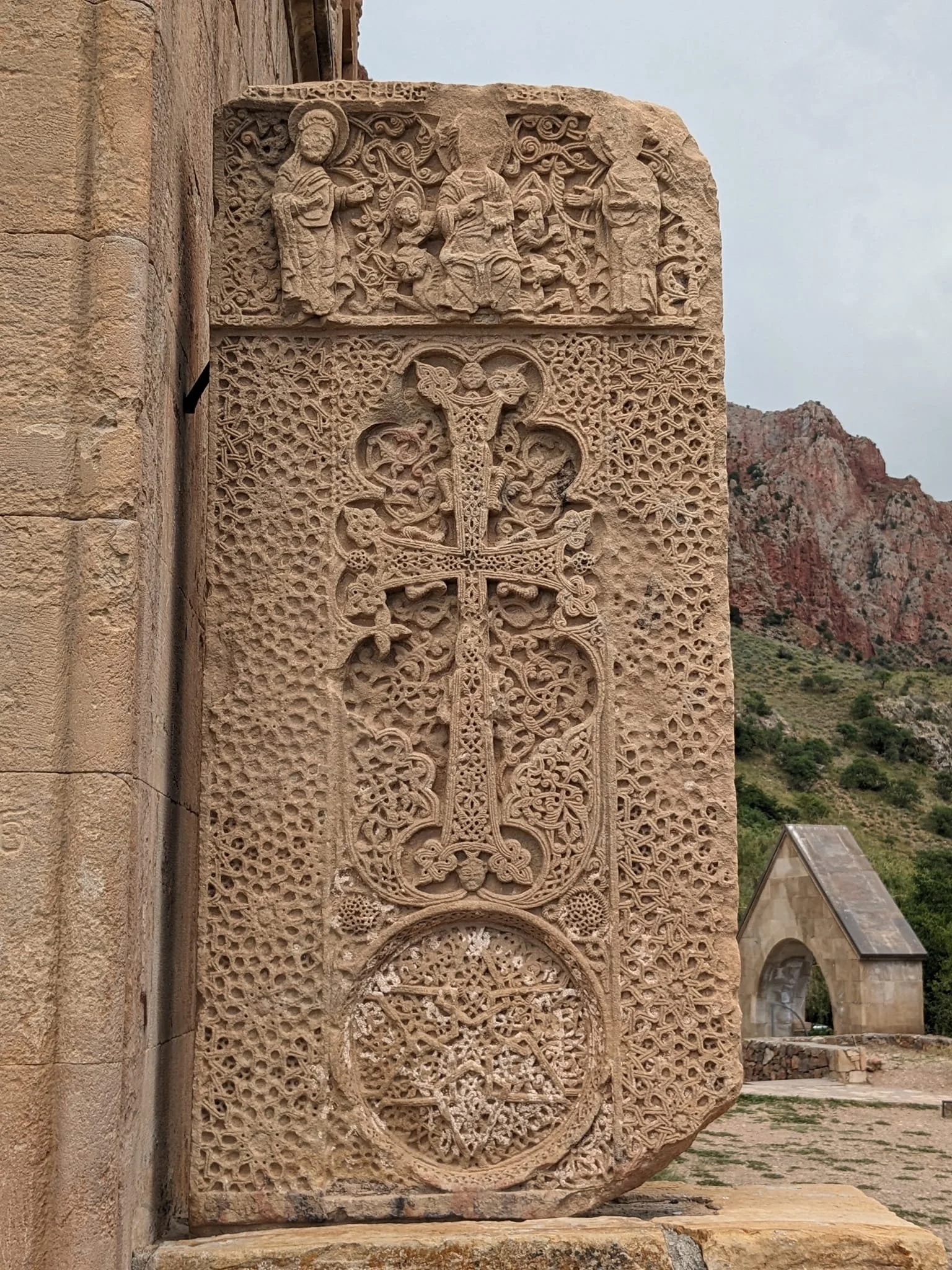
Most of the most impressive artistic elements are external carvings, especially around doors or in the form of the highly intricate cross carvings (khachkars), erected as memorials to the departed or to commemorate important events. The carving itself is often in a simple and relatively abstract style, not at all lifelike, but with a great interest in patterned decoration. There are parallels with the kind of carving I was seeing in the churches of the Tur Abdin, but I think it also comes of the church being relatively isolated from both Byzantine and Western church art for so much of its history. This also accounts for some other unusual features of Armenian Orthodoxy, like the survival of animal sacrifice.


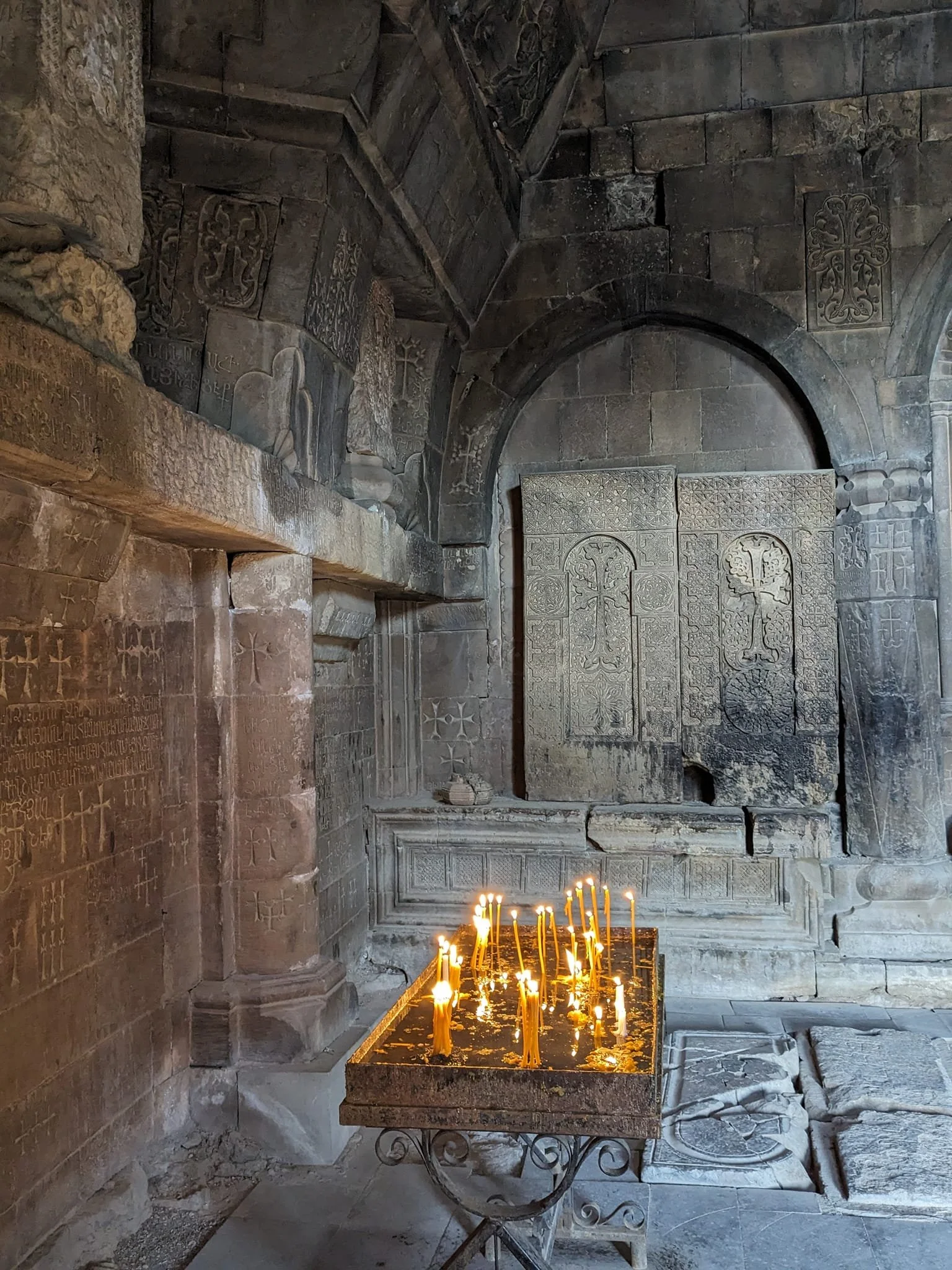


Many churches also have large funerary chapels, called gavits. These can sometimes be larger than the churches themselves, and with the flat gravestones moved about by time and the occasional earthquake, it can be a challenge to keep one’s footing in the dark. Most of the ancient monasteries were built by local princes, for whom the gavits were family tombs, and often decorated more with their heraldic symbols than Christian iconography. There are parallels with early medieval church architecture in Northern Europe.
The churches are extremely dark inside, almost like caves, and when I visited one monastic church at Geghard that was partly cave and partly free-standing construction, it was hard to tell which part of building one was in because all was so dark and weathered. Armenian Christianity has always been very monastic, and I wonder if the cave shrines and cave monasteries of Egypt and ancient Syria may have shaped this tradition in important ways.
In addition to Khor Virap, Geghard, and Etchmiadzin, I visited the monasteries of Harichvank in the Northeast and Noravank, at the end of a long gorge of red sandstone in the central part of the country. The main cathedral and its treasury were closed for renovations at Etchmiadzin, but I was able to visit the impressive churches dedicated to two early martyrs who came from Rome to help Gregory in his efforts. I will need to return someday to see the famous relics, the spear that pierced Christ’s side and a piece of Noah’s ark (radio-carbon dated to 4000 BC),


It was also interesting to visit the Garni Temple, a 2nd century temple built by the Romans to the god Mithra during a brief period in which Armenia served as an important buffer state between Rome and the Parthians. The elaborate column capitals could have been carved by the same masons working on the churches in the Tur Adbin.


I also visited the world’s largest Yezidi temple at Akhnalich, near Etchmiadzin. A religion of the Kurds that fuses Islamic sufism and traditional beliefs similar to Zoroastrianism, the Yezidis have been extensively persecuted in their traditional homelands in Eastern Turkey, and more recently, by the Islamic State in Northern Iraq. Armenia has welcomed them (maybe having common cause in their experience of persecution), and this brand new temple (opened in 2020) is in the region of Armenia where most of them live. The temple resembles a series of tents, and is paneled in beautiful red marble, with a symbol of their chief angel, the peacock, on the altar. The temple was set in a beautiful rose garden.


Returning back into Georgia for my flight home (because of the remaining diplomatic tensions, there are no flights from Armenia to Turkey), I stopped off at Georgia’s oldest extant church, the fifth century Bolnisi Sioni Cathedral, in the green hills south of Tibilisi. It reminds one of Rome’s early basilicas, with some beautifully carved columns, and all of it cut from the local greenish sandstone, which was quite striking.
It has been a fascinating few weeks, most of it spent among the great monuments of what we generally call the Oriental Orthodox Churches, the ancient churches that grew up on the fringes of the ancient Roman Empire and eventually embraced a distinctive Christology. These churches have spent most of their existence as minority populations in states dominated by Islam.
Despite their distance from each other, they share a common history of martyrdom and monastic spirituality, and there are remarkable architectural and artistic similarities in their churches. The important connecting link has most often been the Syrian Orthodox Church, now the smallest and most troubled of them all. It has been a moving journey, and a beginning to what I hope will be more study and travel (and prayer) about these communities of God’s people.